 440 Nicholson Rd, Forrestdale WA 6112
 (08) 9397 1286
 reception@dentalvet.com.au
What really happens during your horse’s dental examination and floating
10 April 2026 / Dr Kirsten Jackson
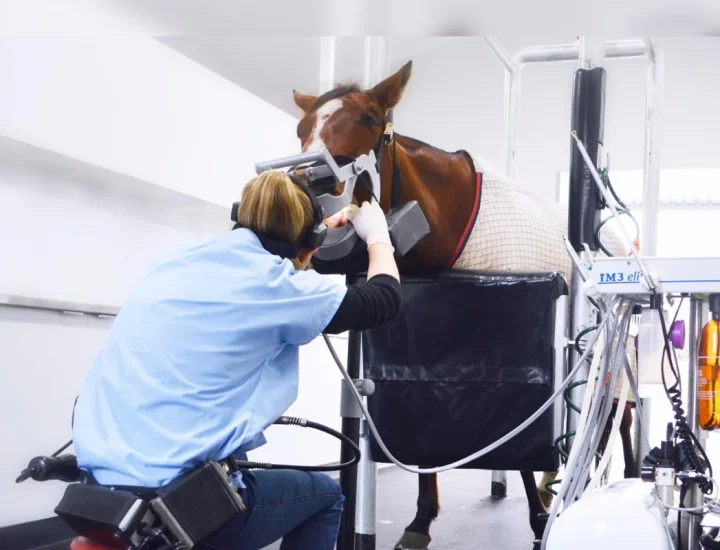
When Dental Vet was founded, our mission was to bring world-class equine veterinary dental standards to Western Australia. Our evidence-based approach, developed over 18 years of experience and supported by domestic and international training, enables us to detect the subtle signs of dental disease, helping horses avoid long-term, unnecessary pain and owners avoid costly, invasive solutions if left unchecked.
Professional equine dental care involves far more than floating sharp points. We structure appointments to look at the horse as a whole patient, conducting a detailed examination, looking for subtle signs of disease. We show you the pathology and clearly explain any anomalies we find and what they mean for your horse.
Many painful dental problems begin with small, quiet changes that are easy to miss. We are thorough; however, when it comes to your horse’s pain, detail matters, and this standard of care is what horse owners should expect from their equine dental provider.
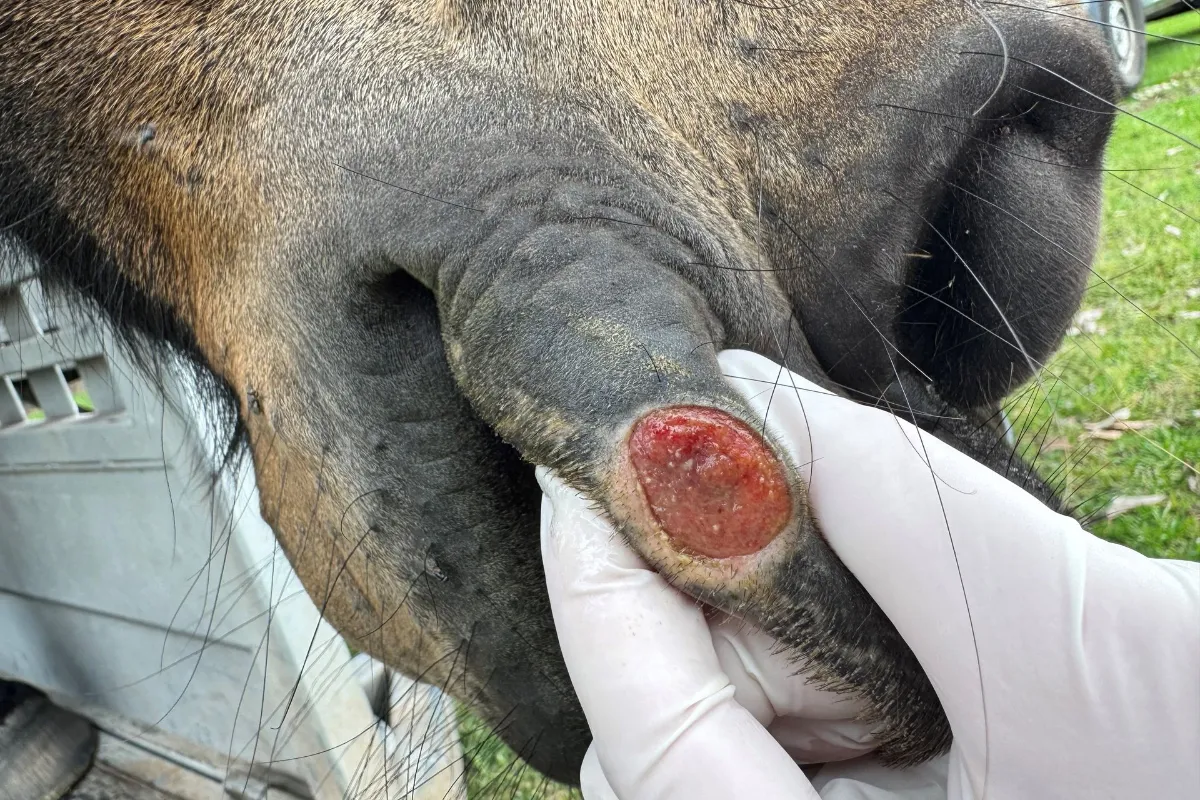
Habronema lesion (“summer sore”) affecting the mouth. These parasitic wounds can be painful, slow to heal, and are often mistaken for simple trauma without careful examination.
Before We Even Begin The Dental
Horses can be easily stressed in unfamiliar environments, so on arrival, our priority is to help the horse relax in their surroundings and keep everything as calm and gentle as possible. We require sedation to perform a thorough examination, and before administering sedation, we undertake a physical examination to assess whether we can safely sedate the horse.
We also check for additional factors, such as gut sounds and signs of abdominal sand, evidence of endocrine disease, skin lesions, wounds, and other health challenges that may require attention. Animal safety and welfare are always our highest priority, and that’s why we do what we do.
We assess the muscles of the head and jaw for signs of uneven chewing, palpate the lymph nodes under the jaw, feel for swellings or asymmetry over the face, examine for nasal discharge, and assess the sinuses. These findings guide the next stage of the examination and build a more complete picture of the animal’s overall health.
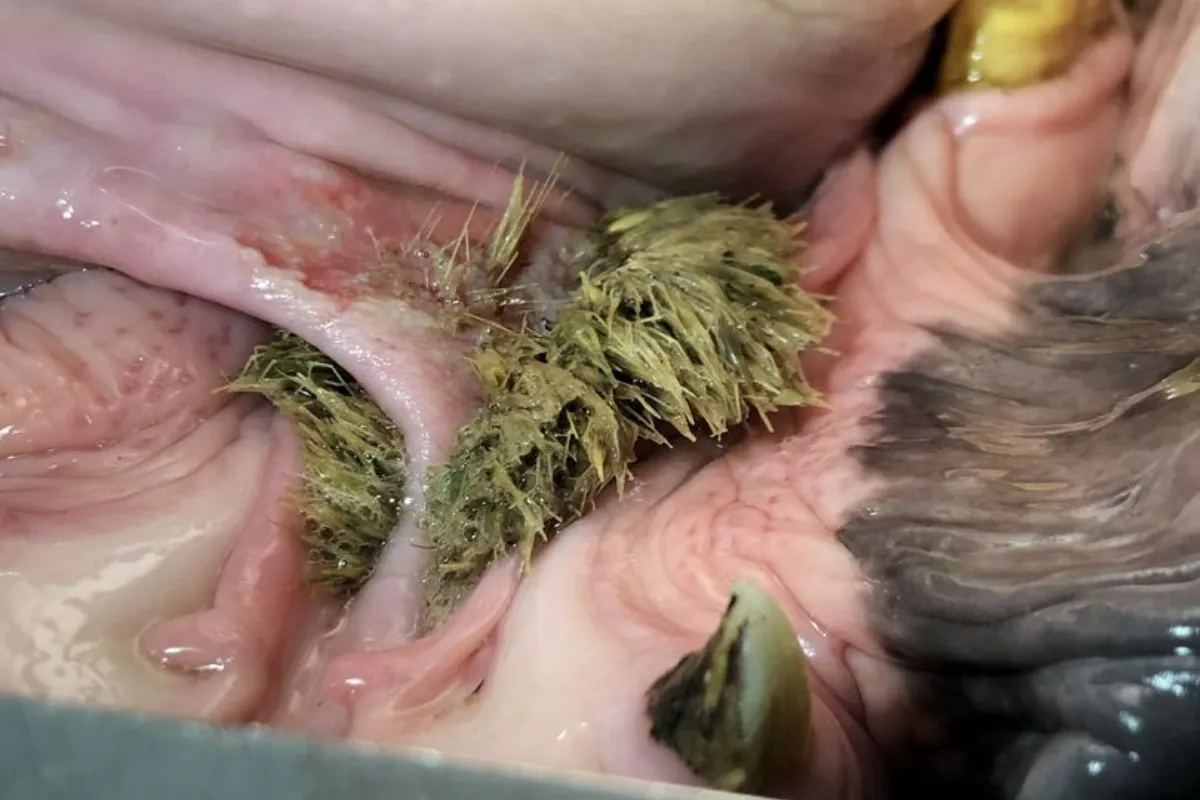
Grass seeds lodged under the tongue causing a painful ulcer. Easily missed without a thorough examination.
Looking Inside The Mouth- Detailed Oral Examination
We examine the soft tissues of the mouth, the incisors, and the jaw’s movement for subtle changes that may indicate underlying disease. A tiny dark spot on the grinding surface of the tooth, for example, may be the only visible sign that a tooth is dead and abscessed.
We undertake a comprehensive oral examination of each tooth and its surfaces using dental mirrors, probes, and oral endoscopes. We look for ulcers, foreign bodies, and injury. We examine between the teeth for feed packing and periodontal disease, and assess the tooth surfaces for fractures and decay. We inspect the grinding surfaces for subtle changes that may signal serious underlying pathology and can perform X-rays and further diagnostics if required.
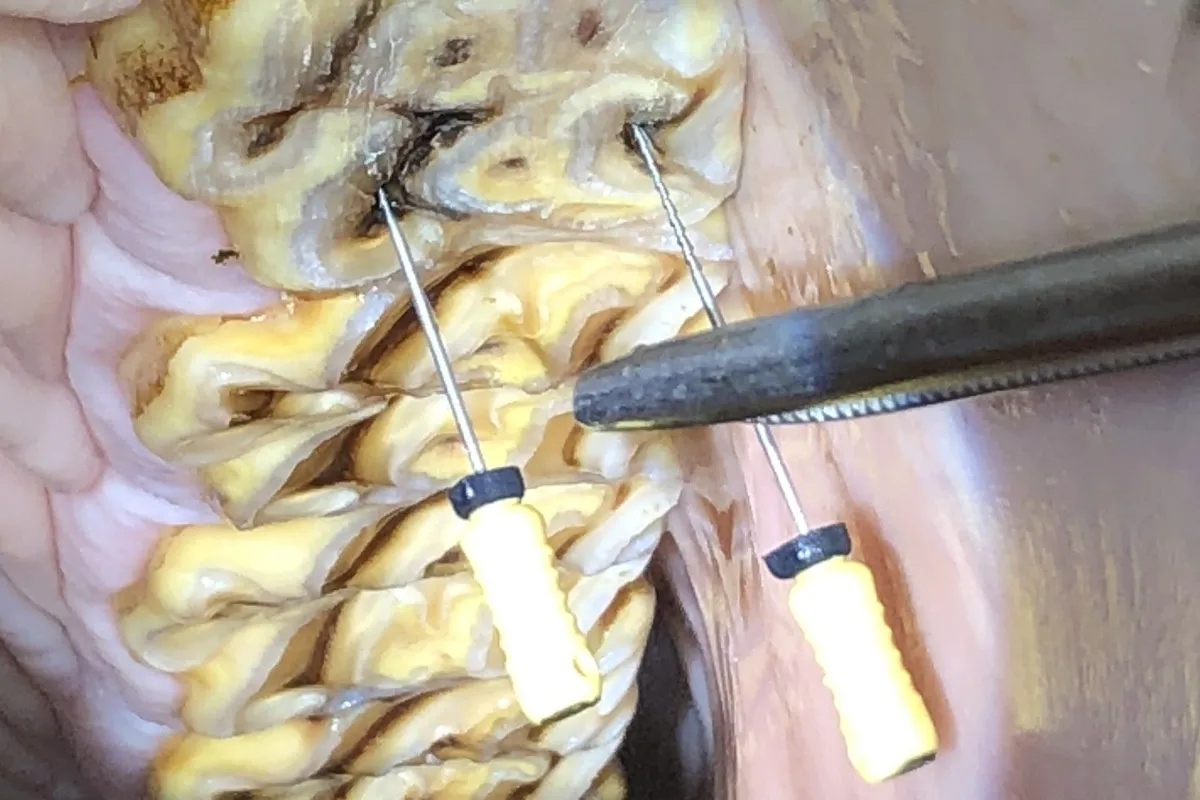
Endodontic treatment in progress. Advanced care is only possible with early diagnosis.
Floating And Corrective Dental Work
Guided by the diagnosis, we treat the pathology, including advanced periodontal disease, by removing rotten feed material between the teeth and treating the infection as required. Early and thorough treatment of periodontal disease is a key focus, as it can significantly improve long-term comfort and prevent progression to more serious disease. We then perform floating to reduce sharp enamel points, address overgrowths, and improve chewing function. Subtle adjustments can catch small problems early and prevent more serious pathology. For ridden horses, we also pay close attention to areas affected by the bit, and then do a final assessment to ensure we have treated all areas of pathology.
We provide owners with a dental chart, detailed notes, recommendations, and any imagery from the appointment. This allows us to track progress, explain findings, and make informed decisions about treatment and follow-up.
We want our clients to understand that this process is designed with the horse’s welfare in mind. It is why appointments are not rushed, why we encourage owners to stay and ask questions, and why we place so much importance on thorough examinations. When you understand what is happening in your horse’s mouth, you are in a better position to make informed decisions about their care. When we identify problems early, we can often prevent a great deal of unnecessary and costly work before they become something more serious.
Your horse deserves thoughtful, detailed veterinary dental care, and our philosophy at Dental Vet is that oral pathology and pain should be treated early or prevented whenever possible. We take the time to ensure the animal is assessed, treated, and given every opportunity to live a happy, pain-free life.

Meet the Author
Dr Kirsten Jackson is the Owner and Director of Dental Vet and is passionate about her craft, treating every patient with the time, care and consideration she would give her own.
She is dedicated to improving the comfort and wellbeing of horses and other equine patients through advanced, preventative and compassionate dental care.

Whether you've got a new foal, referring a patient for review, or are worried about your horse's wellbeing, we're here to help!