 440 Nicholson Rd, Forrestdale WA 6112
 (08) 9397 1286
 reception@dentalvet.com.au
Why horses resist the bit
4 June 2026 / Dr Kirsten Jackson
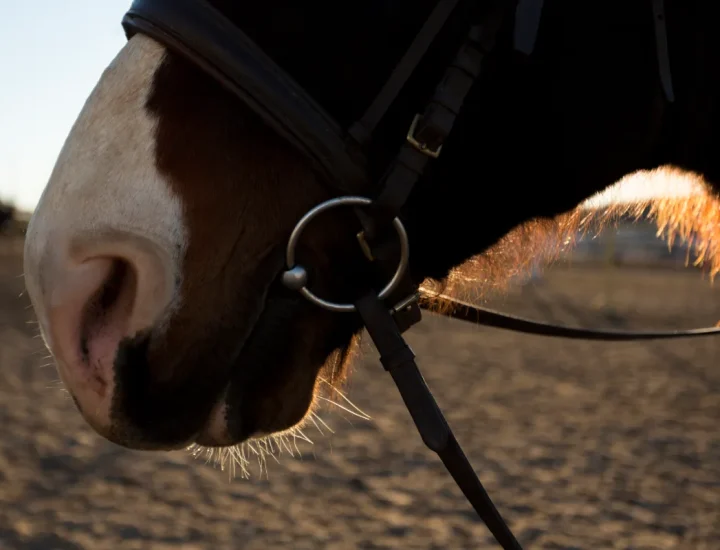
Most riders have experienced it at some point. A horse that starts tossing its head, opening its mouth, leaning on the contact, becoming difficult to bridle, or simply feeling different in the hand. Sometimes the cause is obvious. A change in equipment, a rider adjustment, or a training issue may explain the behaviour. Other times, despite checking the bit, the bridle, the saddle and our own riding, the problem persists.
As horse owners, we naturally try to work through the obvious possibilities first. That is sensible horsemanship. What is important to remember, however, is that resistance to the bit can also be a horse’s way of responding to discomfort.
Research has shown that dental disease can affect eating behaviour, bit behaviour, and general behaviour.1 In other words, changes under saddle can sometimes be one of the first signs that something is wrong inside the mouth.
Your Horse May Not Be "Being Difficult"
One of the most interesting findings from recent research is that dental pain can produce behaviours that look remarkably similar to poor behaviour, resistance, or training problems.
Horses with painful cheek tooth pathology have been shown to display more bit-related behavioural signs than horses without these findings.1 Conditions such as tooth fractures, wide or darkened fissures, and defects in the protective layer overlying the pulp cavities have all been associated with changes in behaviour.
Research investigating horses with tooth root infections found that owners commonly reported behaviours such as evading the bit, difficulty eating, and changes in temperament before the painful teeth were treated.2 Following treatment, many of those behaviours improved.
This is an important point. A horse does not need to be obviously losing weight, quidding feed, or refusing to eat in order to have a painful dental condition. Many horses continue eating relatively normally while significant disease develops beneath the surface.
That is one reason why dental disease is frequently underdiagnosed. Owners are often managing the signs they can see without realising there may be a painful oral problem contributing to them.
Looking Beyond Sharp Points
When most people think about equine dentistry, they think about sharp enamel points. While these certainly matter, they are only one small part of the picture.
A horse’s mouth contains many structures capable of causing discomfort when ridden. Tooth root infections, fractures, periodontal disease, peripheral caries, painful overgrowths, and EOTRH can all affect comfort and performance.
Some of these conditions produce very subtle signs. A horse may simply become less willing to accept contact, more resistant during transitions, or increasingly uncomfortable when bridled.
In our experience, this is where a thorough examination becomes particularly important. Many painful dental conditions cannot be identified through a quick visual inspection or by feeling a few teeth. They require appropriate lighting, oral examination equipment, and careful assessment of every structure within the mouth.
Research examining horses with tooth root infections found that many cases were identified during routine dental examinations rather than because owners recognised obvious signs of dental pain.2 That highlights just how subtle these conditions can be.
The Bit Is Not Always The Problem
While dental disease is a common contributor to bit resistance, it is important not to assume that every horse resisting the bit has a dental problem. The mouth is often where discomfort becomes visible, but it is not always where the problem originates.
Research into ridden horse behaviour has demonstrated that musculoskeletal pain can present as resistance in the contact.3 Horses experiencing discomfort in the back, neck, limbs, or sacroiliac region may brace, hollow, evade contact, rush, or toss their heads because ridden work itself has become uncomfortable.
Similarly, saddle fit, rider balance, and rider influence can affect how a horse responds to the bit.3 In these situations, the horse may appear to have a mouth problem when the source of discomfort lies elsewhere.
This is why a thorough veterinary assessment considers the whole horse rather than focusing exclusively on the mouth.
Other Medical Conditions Can Mimic Bit Resistance
There are also several conditions outside the mouth that can create behaviours commonly attributed to the bit.
Horses affected by trigeminal nerve-mediated headshaking may toss their heads, rub their noses, snort, avoid contact, or show increased tongue and lip movement.4 To an owner, these signs can easily look like a horse that dislikes the bit.
Lameness can also be mistaken for a bitting issue. Horses experiencing pain elsewhere in the body may alter the way they carry their head and neck under saddle. In some cases, the head movement associated with lameness can be mistaken for head tossing or resistance to the bit when the underlying issue lies elsewhere.
Gastric ulcers may also influence behaviour under saddle. While ulcers do not directly affect the mouth, they can contribute to discomfort, tension, reactivity, and poor performance, which may alter how a horse accepts contact.5
Pain involving the temporomandibular joint, which connects the jaw to the skull, may also contribute to discomfort during chewing, flexion, and contact. 6
As veterinarians, we can assess the whole horse, rather than focusing solely on the bit or the teeth, which helps us identify pain and discomfort that might otherwise be missed. This approach benefits not only the current visit but also future appointments. Horses remember their experiences, and ensuring each one is positive is an important aspect of responsible, compassionate care.
What About Training And Previous Experiences?
Not every case of bit resistance is caused by pain. A horse’s previous experiences with the bit, early training, rider influence, and learned behaviours can all affect how they respond under saddle. Horses that have developed avoidance behaviours may continue to display them even after the original cause has been addressed.
For that reason, we believe it is important to avoid oversimplifying the issue. Assuming every horse is sore can be just as unhelpful as assuming every horse is being difficult.
The goal is to determine what factors are relevant for the individual horse.
Bit Resistance Is A Symptom, Not A Diagnosis
When a horse starts resisting the bit, the behaviour itself is rarely the answer. It is simply a clue that something may have changed.
Sometimes the cause lies within the mouth. Sometimes it involves the musculoskeletal system, tack, rider influence, training history, or another medical condition. In many cases, more than one factor is involved.
What the research consistently shows is that painful dental disease can influence behaviour long before the signs become obvious. That is why thorough examinations remain such an important part of maintaining both health and performance.
For horses experiencing bitting concerns, we can also assess bit fit during the appointment. Owners are welcome to bring their bit along so we can evaluate its position and identify any areas where it may be contacting sensitive structures within the mouth.
References:
1. Laukkanen et al., Journal of Equine Veterinary Science, 2023, “Behavioral Signs Associated With Equine Cheek Tooth Findings.”
2. Pehkonen, Karma & Raekallio, Journal of Equine Veterinary Science, 2019, “Behavioral Signs Associated With Equine Periapical Infection in Cheek Teeth.”
3. Dyson, Equine Veterinary Education, 2021, “The Ridden Horse Pain Ethogram.”
4. Pickles, Equine Veterinary Education, 2022, “Trigeminal-mediated headshaking: A diagnostic challenge.”
5. BEVA/Wiley, Equine Veterinary Education, “Update on diagnosis, nonpharmacological treatment and prevention of equine gastric ulcer syndrome.”
6. Carmalt, Journal of the American Veterinary Medical Association, 2024, “Equine poor performance: the logical, progressive, diagnostic approach.”

Meet the Author
Dr Kirsten Jackson is the Owner and Director of Dental Vet and is passionate about her craft, treating every patient with the time, care and consideration she would give her own.
She is dedicated to improving the comfort and wellbeing of horses and other equine patients through advanced, preventative and compassionate dental care.
FAQs
Why Is My Horse Resisting The Bit When They Have Always Been Fine Before?
A sudden change in behaviour under saddle can sometimes be linked to discomfort in the mouth. Painful conditions such as periodontal disease, tooth root infections, fractures, soft tissue injuries, wolf teeth, or trauma to the bars of the mouth can all contribute to bit resistance. A thorough dental examination performed by a vet is important because many of these problems can be difficult to identify without a detailed assessment.
Can Wolf Teeth Cause Problems With The Bit?
Wolf teeth do not usually affect eating, but they can sometimes cause discomfort in bitted horses. If the bit contacts a wolf tooth directly, or presses soft tissues against a sharp or unerupted wolf tooth, some horses may show signs of bit resistance. Careful examination of the bars and surrounding tissues helps identify whether wolf teeth may be contributing to the problem.
Can Dental Problems Cause Changes In My Horse's Behaviour Under Saddle?
Yes, some dental conditions can affect how a horse responds when ridden. Painful ulcers, periodontal disease, overgrowths, tooth fractures, and infections may lead to behaviours such as opening the mouth, tossing the head, avoiding contact, or resisting the bit. These behaviours do not automatically mean a dental problem is present, but the mouth should be included as part of any investigation.
What Areas Of The Mouth Can Cause Bit Discomfort?
The bit sits on the bars of the mouth, making this area particularly important to examine. Bony changes, soft tissue injuries, wolf teeth, lip injuries, ulcers caused by sharp dental points, and other abnormalities can all contribute to discomfort when a horse is ridden. Even small lesions can become significant when pressure from a bit is repeatedly applied to the area.
Can Sharp Teeth Affect My Horse's Acceptance Of The Bit?
Sharp enamel points can cause ulceration of the cheeks and other soft tissues. When these sore areas are compressed by the bit or surrounding tack, the horse may become uncomfortable and alter their behaviour. Regular dental care helps identify and manage these issues before they progress.
Can A Vet Check Whether My Horse's Bit Fits Correctly?
Yes. If your horse is experiencing bitting concerns, you are welcome to bring the bit to the appointment for assessment. Combined with a thorough oral examination, this allows evaluation of whether the bit is sitting appropriately and whether there are any sensitive areas, injuries, or abnormalities that may be affected by its position.

Whether you've got a new foal, referring a patient for review, or are worried about your horse's wellbeing, we're here to help!